BMW Integrates Humanoid Robots in Production — A New Era of Industry Experience During College & Career Launch Platform Thinking
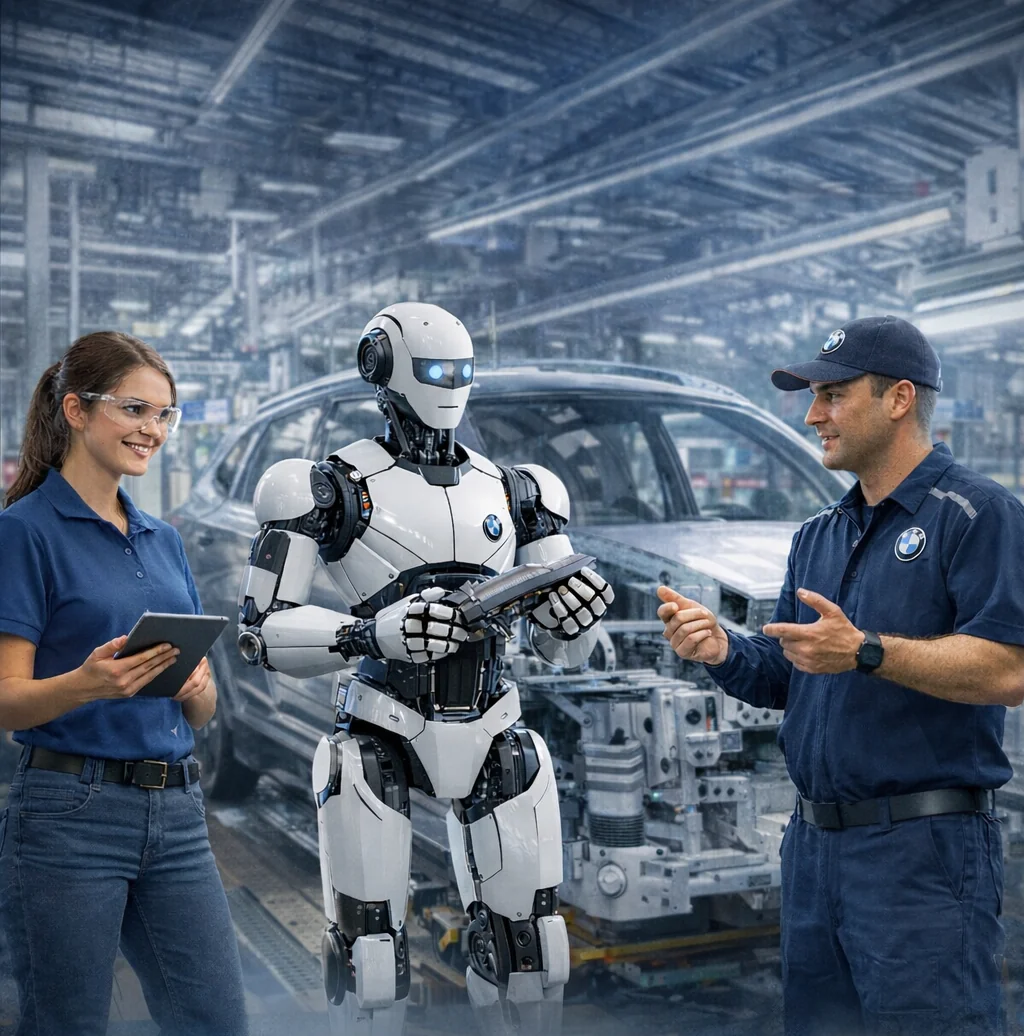
BMW has recently announced a major pilot initiative to integrate humanoid robots into its manufacturing operations at its Leipzig plant in Germany as part of its strategic Physical AI program. This marks an important shift in industrial automation, showing how cutting-edge technology is being tested to support human workers while expanding opportunities for practical experience and professional exposure for students in tech-driven fields.
The project follows earlier trials in the United States where advanced humanoid robots were used successfully in tasks such as transporting parts and assisting with welding operations. These human-like machines are designed to handle repetitive, ergonomically challenging, or safety-critical tasks — creating a model where automation works with people rather than replacing them outright.
BMW stresses that the goal is to reduce physical strain on workers and enhance production flexibility, while still relying on human oversight — a concept that aligns well with the kinds of remote work experience and online career training environments that modern learners seek.
This direction also points to broader opportunities for students and new graduates to gain industry experience during college, take part in professional exposure for students programs, and build skills that are hard to acquire in traditional classroom settings. These include real-world problem solving, digital and AI-enabled manufacturing proficiency, and a deeper understanding of how robotics are reshaping the workplace.
What This Means for Students & Early Careers
The trend toward advanced robotics in industry highlights why experiential learning and career acceleration for students is more important than ever:
These technologies emphasize the value of practical skills faster than typical academic study alone.
Working (or interning) with AI and robotics systems gives learners real projects for resume building and proof of work for freshers.
Exposure to these environments helps students prepare for first job roles that expect familiarity with automation, data systems, and industrial software.
Such experience bridges the gap from campus to job transition — providing employers with a skilled student workforce ready to contribute from day one.