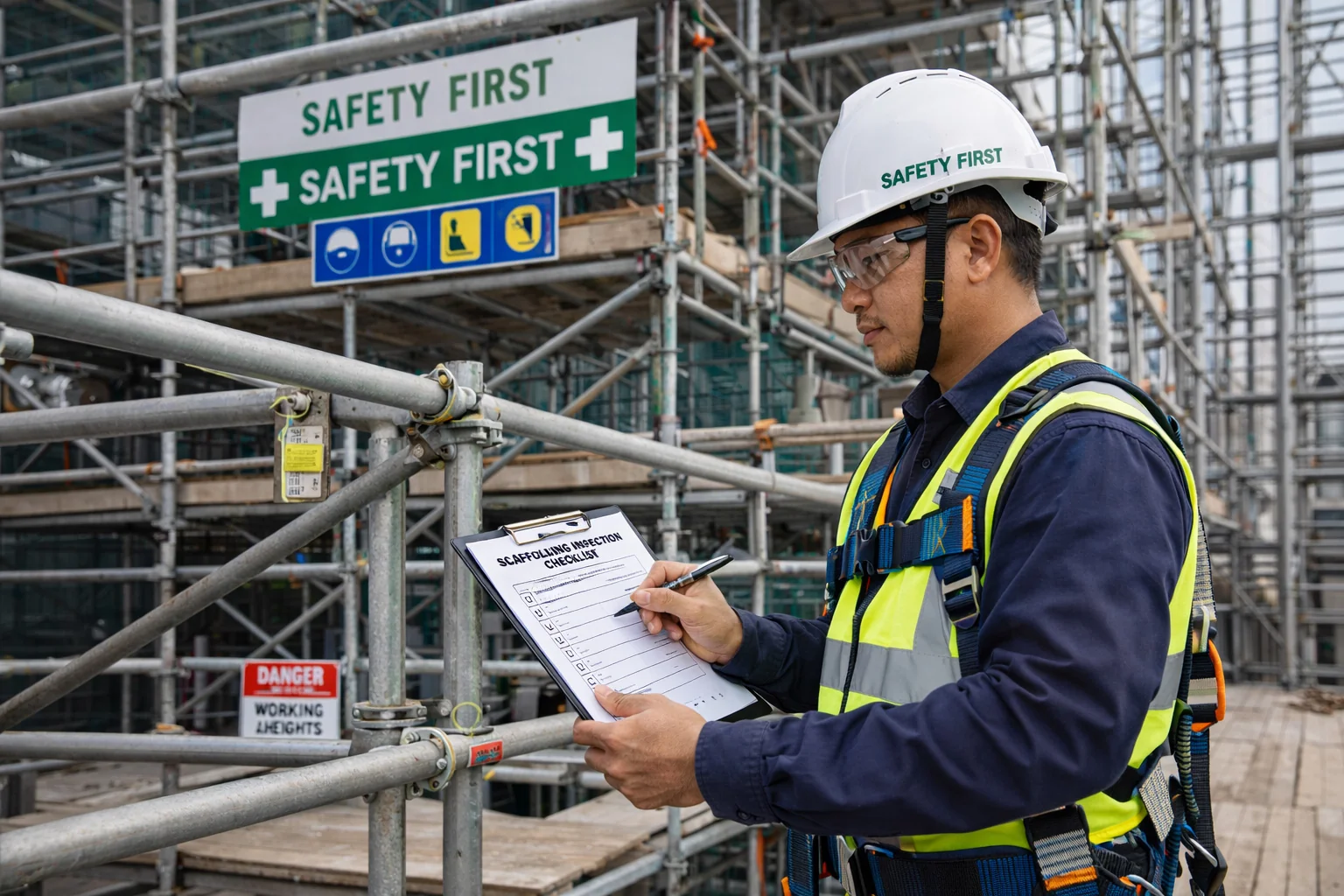
Scaffold inspection training plays an important role in maintaining workplace safety and supporting Health, Safety, and Environment (HSE) standards in the construction industry. Scaffolding provides temporary access and working platforms for employees performing tasks at height. However, improperly assembled, damaged, or poorly maintained scaffolds can expose workers to serious hazards. Proper training helps inspectors, supervisors, and construction personnel understand scaffold safety requirements, identify potential risks, and follow appropriate inspection procedures. By developing practical knowledge and safety awareness, organizations can improve scaffold management, reduce workplace risks, and promote a safer construction environment.
1. Understanding the Importance of Scaffold Inspection Training
Scaffold inspection training helps workers understand why regular inspections are necessary before scaffolds are used and throughout their period of service. Training introduces employees to the basic components of scaffolding, including platforms, guardrails, access ladders, braces, and supporting structures. It also explains how these components contribute to scaffold stability and worker protection. When employees understand the purpose of each component, they are better prepared to recognize unsafe conditions and report potential problems. This knowledge supports consistent inspection practices and encourages a stronger safety culture across construction sites.
2. Improving Knowledge of HSE Standards and Safety Requirements
A major benefit of scaffold inspection training is that it helps employees understand the HSE standards and applicable safety requirements relevant to their work. Training can cover inspection responsibilities, safe access arrangements, fall prevention, load limitations, and procedures for reporting defects. Workers and inspectors should also understand the local regulations and organizational procedures that apply to their construction projects. By learning these requirements, employees can perform their responsibilities more consistently and help their organizations maintain appropriate safety practices. Training should be reviewed regularly to reflect changes in applicable regulations, equipment, and workplace procedures.
3. Identifying Common Scaffolding Hazards
Scaffold inspection training teaches participants how to recognize hazards that may compromise worker safety. Common hazards include unstable foundations, missing guardrails, damaged platforms, loose connections, inadequate bracing, unsafe access points, and overloading. Environmental conditions such as strong winds, heavy rain, or slippery surfaces can also affect scaffold safety. Through practical demonstrations and examples, trainees can learn how to identify these hazards and understand when a scaffold should not be used. Early hazard recognition allows organizations to take corrective action before unsafe conditions lead to injuries or other incidents.
4. Developing Effective Scaffold Inspection Procedures
An effective inspection process requires a systematic approach rather than a quick visual check. Training helps inspectors follow a structured procedure that covers scaffold foundations, structural components, working platforms, access points, edge protection, and visible signs of damage or movement. Inspectors should also verify that the scaffold is appropriate for its intended use and that any relevant modifications have been properly assessed. A consistent inspection procedure reduces the likelihood of overlooking important safety concerns. Organizations can support this process by providing clear inspection checklists, reporting forms, and guidance on when inspections are required.
5. Strengthening Fall Prevention and Working-at-Height Safety
Falls from height are a significant concern on construction sites, making fall prevention an essential part of scaffold inspection training. Workers need to understand the importance of suitable guardrails, safe access, properly secured platforms, and appropriate fall protection measures where required. Training also helps inspectors recognize gaps in edge protection and other conditions that could increase the risk of a fall. By understanding how these safeguards work together, employees can contribute to safer working conditions. Employers should ensure that fall prevention arrangements meet applicable requirements and are appropriate for the specific scaffold and work activity.
6. Promoting the Competence of Scaffold Inspectors
Competent scaffold inspectors need suitable knowledge, practical skills, and an understanding of the scaffolding systems they are responsible for inspecting. Training can help develop these abilities through classroom instruction, practical exercises, supervised inspections, and assessments. Inspectors should know how to identify defects, evaluate visible safety concerns, record findings, and communicate when a scaffold must be restricted from use. Training alone may not establish competence in every situation, so employers should also consider relevant experience, qualifications, and authorization requirements. Maintaining inspector competence supports more reliable inspections and better workplace safety management.
7. Encouraging Clear Communication and Hazard Reporting
Clear communication is essential when scaffold defects or unsafe conditions are identified. Scaffold inspection training helps workers understand how to report hazards to supervisors, safety officers, or other responsible personnel. It can also explain how inspection findings should be documented, communicated, and followed up. If a scaffold is considered unsafe, workers need to understand the site procedures for preventing its use until the necessary corrective actions have been completed and the scaffold has been appropriately reassessed. A reporting culture that encourages employees to raise concerns without hesitation helps organizations respond to hazards more effectively.
8. Improving Inspection Documentation and Record-Keeping
Accurate documentation is an important part of scaffold safety management. Training should explain how to record inspection dates, scaffold identification details, observed defects, corrective actions, and the names or roles of responsible personnel, according to applicable procedures. Well-maintained records help supervisors monitor inspection activities and determine whether reported problems have been addressed. They can also support internal audits, incident investigations, and compliance reviews. Using standardized forms or suitable digital inspection systems can make records easier to organize and retrieve. Proper documentation helps provide a clearer picture of scaffold conditions and safety management activities.
9. Reducing Workplace Risks Through Preventive Maintenance
Scaffold inspection training supports preventive maintenance by helping personnel recognize when scaffold components require repair, replacement, or further assessment. Damaged boards, corroded metal components, loose fittings, and other defects should be handled according to established procedures. Training can also explain why unauthorized repairs or modifications must be avoided. When inspection findings are linked to a timely maintenance process, organizations can address problems before they create greater risks. Preventive maintenance, combined with appropriate inspections and competent supervision, helps maintain scaffold safety throughout the construction project.
10. Building a Stronger Workplace Safety Culture
A strong safety culture develops when workers, supervisors, inspectors, and management share responsibility for preventing accidents. Scaffold inspection training encourages employees to take safety requirements seriously and recognize the importance of following established procedures. It also reinforces the value of reporting hazards, participating in safety briefings, and cooperating with inspection teams. When organizations provide regular training and demonstrate a commitment to addressing safety concerns, employees are more likely to participate actively in workplace safety activities. This shared commitment helps make scaffold safety an everyday priority rather than a task performed only during formal inspections.
11. Supporting Continuous Improvement in HSE Performance
Scaffold inspection training should be treated as an ongoing process rather than a one-time activity. Refresher training, toolbox talks, practical assessments, and reviews of inspection findings can help employees maintain their knowledge and improve their skills. Organizations can also examine recurring scaffold defects, reported hazards, and inspection records to identify areas where additional training may be needed. Lessons learned from incidents and near misses can be incorporated into future training sessions. Continuous improvement helps ensure that scaffold inspection practices remain relevant to changing work conditions, equipment, and safety requirements.
For more info visit us : https://exigasoftware.com.sg/scaffold-inspection-hse-standards/
Contact us :
+65 8876 6151
Mail us :