Scientific research increasingly depends on technologies that can collect information, perform repetitive tasks, and operate in environments that may be difficult or unsafe for people. Robotics has become an important part of this development. From laboratory automation to exploration systems, robotic machines can support researchers by improving consistency, gathering data, and extending human capabilities.
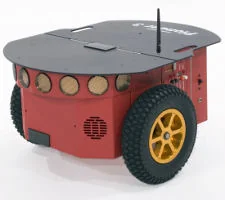
How Robotics Supports Research
Research environments often require precision and repeated measurements. Automated machines can perform carefully defined procedures while following programmed instructions. This can help researchers focus more attention on analyzing results and developing new hypotheses.
Common Research Applications
Robotic systems can contribute to areas such as:
Laboratory sample handling
Environmental monitoring
Space and planetary exploration
Underwater investigation
Medical and biological research
Materials and engineering experiments
The specific design of a research robot depends heavily on its intended environment and the tasks it needs to perform.
Precision Meets Automation
One major benefit of robotics in research is the ability to repeat tasks consistently. A machine can follow the same programmed sequence numerous times, reducing variations caused by manual repetition. Sensors can also allow robotic systems to collect information about temperature, movement, pressure, chemical conditions, or other variables.
Exploring Difficult Environments
Some research locations are challenging for humans to access directly. Robots can be designed to operate in extreme temperatures, deep water, hazardous facilities, or remote locations. In these situations, robotics can provide researchers with another way to observe conditions and gather valuable information.
Combining Robotics With Artificial Intelligence
Modern research machines can incorporate advanced software, computer vision, sensors, and artificial intelligence. These technologies can help robots identify objects, interpret environmental information, or adjust their actions according to predefined conditions.
However, automation does not remove the need for human expertise. Researchers still determine objectives, evaluate data, verify results, and decide how robotic systems should be used.
The Humanoid Group explores developments across robotics and educational technology, providing information about different applications of intelligent machines. Readers interested in emerging research technologies can explore more to understand how automation is influencing scientific work.
The Future of Research Automation
As sensors, computing systems, and robotic hardware continue to develop, research machines may become more capable and adaptable. Research Robots can support scientific investigation by handling specialized tasks, reaching challenging environments, and collecting information with controlled precision. Their expanding role highlights how robotics can work alongside researchers to advance knowledge across multiple fields.