Missing teeth can affect much more than the appearance of your smile. Depending on where the tooth is missing, it can affect chewing, speech and confidence. Fortunately, modern dentistry offers several ways to replace missing teeth, including dental implants.
For patients considering Dental Implants Aylesbury, understanding how implants work, who may be suitable and what the treatment involves can make it easier to have an informed conversation with a dental professional.
What Are Dental Implants?
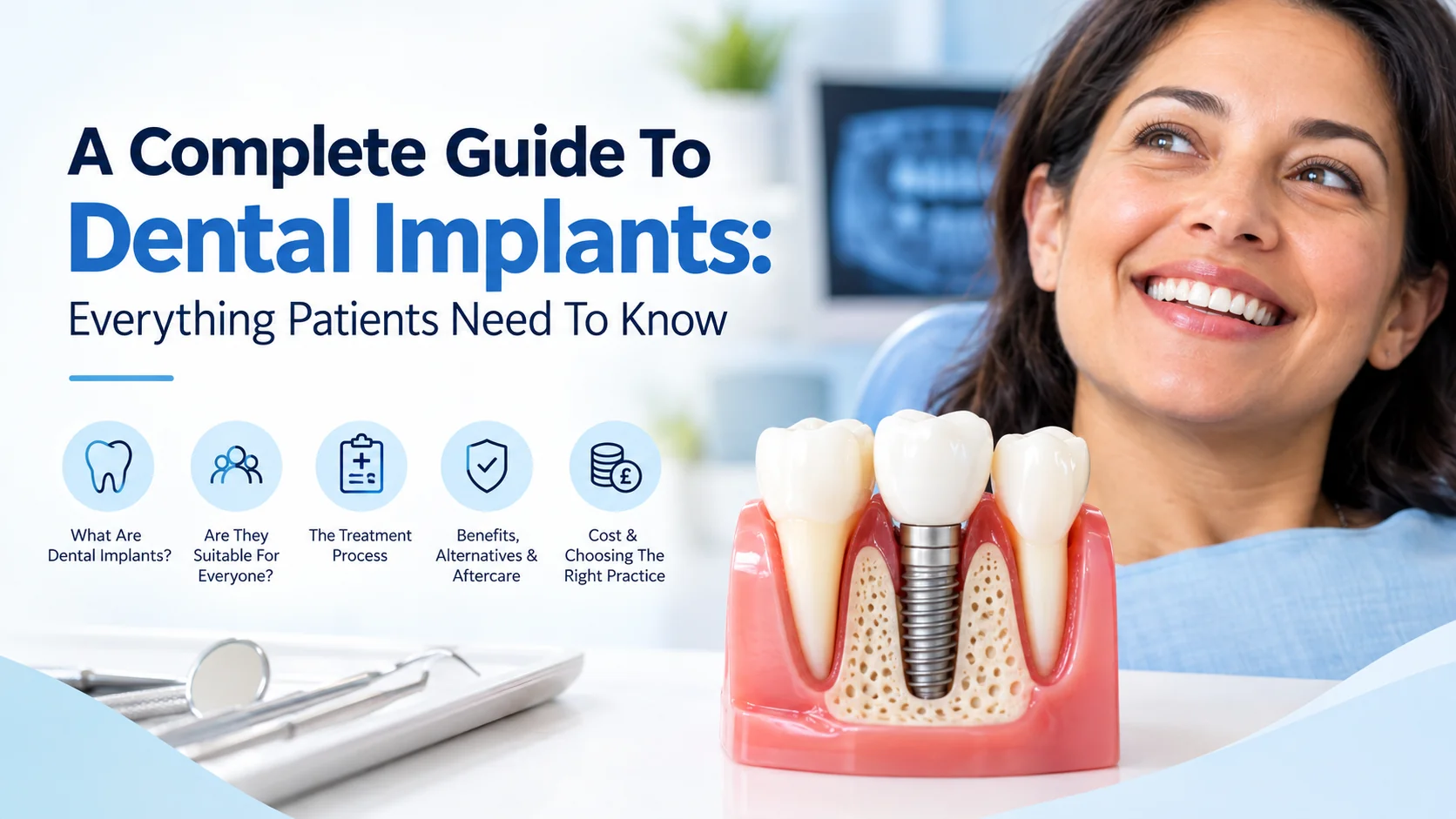
A dental implant is a replacement for the root of a missing tooth. It is placed into the jawbone and can support a replacement tooth such as a crown. Depending on the number of missing teeth and your individual circumstances, implants can also be used to support bridges or implant-retained dentures.
Unlike conventional dentures, implants are fixed into position rather than simply resting on the gums. They can therefore provide a stable foundation for replacement teeth.
Why Consider Dental Implants For Missing Teeth?
There are several reasons why a patient may consider implant treatment.
Dental implants can provide a fixed replacement for missing teeth and can help restore chewing function. They can also avoid the need to rely on removable dentures.
Another potential advantage is that an individual implant does not necessarily require the adjacent teeth to be prepared in the way that some traditional bridge treatments do.
However, implants are not automatically the right solution for everyone. Your dentist will need to assess your oral health, available bone and overall suitability before recommending treatment.
Who Can Have Dental Implants?
Dental implant treatment requires careful assessment and planning.
Your dentist may examine the condition of your teeth and gums and use dental X-rays or a CBCT scan where appropriate to assess the available bone. Kingsbrook Dental states that a CBCT scan may be arranged when a three-dimensional assessment of the proposed implant area is needed.
The condition and quantity of available bone can influence whether an implant can be placed. In some situations where there is insufficient bone, additional procedures such as bone grafting may be considered.
Existing gum problems may also need to be addressed before implant treatment.
What Does The Dental Implant Process Involve?
Dental implant treatment is usually completed in stages rather than during one appointment.
1. Consultation and Assessment
The first stage involves discussing your concerns, examining your mouth and determining whether implants could be suitable. Imaging may be used to help plan the proposed treatment.
2. Implant Placement
If you are suitable, the implant is placed into the jawbone during a surgical procedure, usually using local anaesthetic.
3. Healing Period
The implant needs time to integrate with the surrounding bone. Kingsbrook Dental states that the formal healing period can take approximately two to six months, depending on the circumstances.
4. Replacement Tooth
Once healing has progressed sufficiently, the restoration can be fitted to the implant. The final treatment timeline varies depending on the complexity of the case and whether additional procedures are required.
Can Dental Implants Replace More Than One Tooth?
Yes. Dental implants can be used for different types of tooth loss.
A single implant may be suitable for replacing one missing tooth, while multiple implants can support several replacement teeth. Implant-supported solutions can also be considered for patients who have lost most or all of their teeth.
Kingsbrook Dental also discusses All-on-4 treatment, where multiple implants can be used to support a full-arch replacement. Such treatment requires detailed assessment and planning before proceeding.
Are Dental Implants Difficult To Maintain?
Implant-supported teeth still require regular care. You need to maintain good oral hygiene around the implant and attend dental examinations and hygiene appointments as recommended.
Cleaning around implants is important because inflammation around the tissues supporting an implant can develop when plaque is not adequately controlled.
Your dental team can show you suitable brushing and interdental cleaning techniques for your individual restoration.
How Much Do Dental Implants Cost?
The cost of dental implants varies considerably because every patient's treatment requirements are different. The number of implants, type of restoration, scans and any additional procedures can all affect the overall cost.
Kingsbrook Dental currently lists a £75 consultation for dental implants, while its homepage currently advertises implants from £1,999. Fees and treatment costs can change, so patients should confirm the current pricing and obtain a personalised treatment plan before proceeding.
Choosing Dental Implants In Aylesbury
Dental implants involve careful surgical and restorative planning, so choosing an experienced dental team and having a thorough assessment is important.
Kingsbrook Dental provides implant consultations and treatment in Aylesbury at its practice in Kingsbrook Basin. The practice describes its implant service as involving assessment, imaging, implant placement, healing and subsequent restoration.
If you have missing teeth and want to understand whether implants could be suitable for you, learn more about dental implant options and arrange a consultation with a qualified dental professional.